Structural Fixes That Restore Safe Use
Deck repair services in Tyler for aging outdoor structures showing loose boards, weakened framing, or visible deterioration
Decks in East Texas face constant exposure to humidity, rain, and temperature swings that cause wood to expand, contract, and eventually weaken at connection points. You'll notice loose boards that shift underfoot, railings that wobble when gripped, or visible rot where posts meet the ground. CWG Fence and Decks evaluates deck structures throughout Tyler to identify which components need replacement and which remain sound enough to keep. Many deck failures occur at the ledger board attachment to the house or at ground-level posts, both of which are repairable without rebuilding the entire structure.
Repair work begins with identifying where deterioration has compromised structural integrity versus where surfaces simply show cosmetic wear. Joists are checked for rot and sag, fasteners are inspected for rust and pullout, and flashing is evaluated to confirm water isn't entering the building envelope. Replacing damaged sections while leaving sound framing in place saves cost and extends the deck's functional life by years.
Schedule a deck inspection to assess structural condition and receive a detailed repair estimate.
What Changes After Structural Repairs
Deck repairs typically involve replacing rotted joists or beams, re-fastening loose decking boards with corrosion-resistant screws, and reinforcing connections that have loosened over time. Ledger board repairs require removing siding to properly flash and re-attach the board to the house rim joist with through-bolts, not just lag screws. Posts sitting directly on concrete often rot at the base and need to be cut above the damaged section and mounted on adjustable post bases that lift the wood off moisture-prone surfaces.
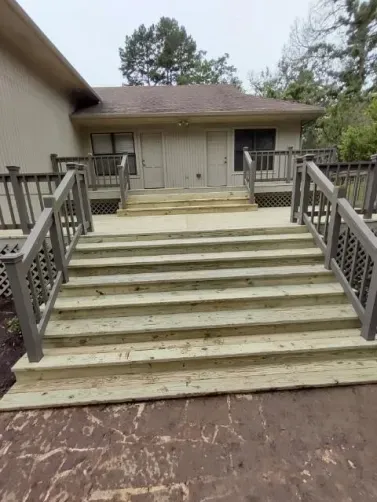
After repairs are completed, the deck surface feels solid without bounce or movement when walked on, railings are stable when gripped, and stairs no longer shift or creak under load. Replacing deteriorated boards removes splinters and trip hazards, and new fasteners eliminate the squeaks and gaps that develop as old nails back out. The deck remains usable for the same activities it was built for, without the safety concerns that come with weakened framing or failing connections.
Some decks show surface-level issues like faded stain or minor board warping but have sound underlying structures that only need cosmetic attention. Others have hidden rot in rim joists or beams that only becomes visible when decking boards are removed. A thorough inspection identifies the difference and prevents spending money on surface fixes when structural repairs are actually needed.
Property owners in Tyler want to know whether repair is more practical than replacement and what specific issues need immediate attention versus routine upkeep.
Answers to Frequent Deck Repair Questions
How do you determine if a deck can be repaired or needs full replacement?
A deck is repairable if the main support beams and posts remain structurally sound, even if some joists or decking boards have deteriorated—if more than half the framing shows rot or if the ledger board attachment has failed, replacement is usually more cost-effective.
What deck problems create safety concerns versus cosmetic issues?
Loose railings, bouncing floors, rotted posts, and separated ledger boards all compromise safety and need immediate repair, while faded stain, surface mildew, and minor board warping are cosmetic and don't affect structural performance.
Why do deck boards become loose over time?
Wood shrinks and swells with moisture changes, which loosens nails and screws over years of expansion cycles—fasteners also corrode in humid conditions, losing holding power and allowing boards to shift or lift.
How long do deck repairs typically extend the structure's life?
Replacing damaged joists, re-securing connections, and addressing rot at critical points like ledger boards and posts can add ten to fifteen years of usable life if the underlying framing was properly built and remains mostly intact.
What should I look for to identify deck damage early?
Check for soft spots when walking on the deck, shake railings to test for movement, inspect where posts contact the ground for dark discoloration or soft wood, and look under the deck for sagging joists or rusted joist hangers that indicate developing problems.
CWG Fence and Decks provides honest assessments of whether repair or replacement makes more sense based on current deck condition and your budget. Request a property evaluation to identify specific issues and review repair options that restore safe outdoor use.