
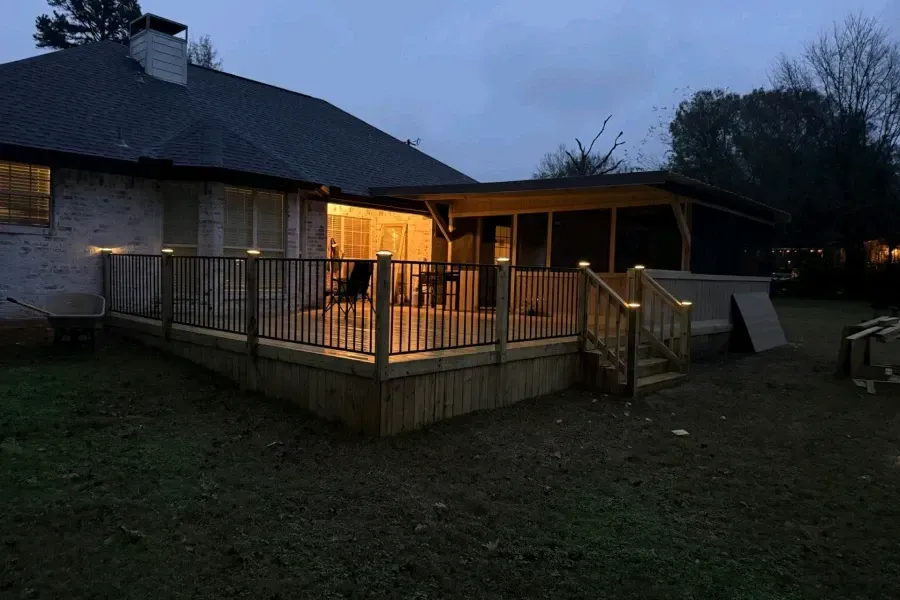
Low-Maintenance Outdoor Surfaces That Last
Composite deck installation in Tyler for homeowners managing high-use outdoor areas without ongoing wood treatment
Wood decks in humid climates require regular sealing and eventually develop splintering, warping, and color fade despite maintenance efforts. CWG Fence and Decks installs composite decking in Tyler and nearby areas as a long-term alternative that resists moisture, insect damage, and UV degradation without the refinishing cycle that wood demands. Composite boards are manufactured from wood fiber and plastic polymers, creating a surface that holds its shape and color through years of sun, rain, and temperature swings common in East Texas.
Composite decking is installed over the same pressure-treated framing used for wood decks, but fastening methods differ—hidden clip systems attach boards from underneath, leaving a clean surface without exposed screw heads. Board expansion and contraction rates vary by brand and temperature range, so proper gapping between boards prevents buckling during summer heat. Color options range from gray and brown tones to reddish and multi-toned finishes that mimic natural wood grain.
Arrange an on-site consultation to compare composite options and review color samples in your actual outdoor lighting conditions.
How Composite Decking Performs Over Time
Composite material does not absorb water like wood, which means it won't rot, split, or become a food source for termites. Surface texture is molded during manufacturing to provide traction when wet, and the outer shell resists staining from spills, dirt, and mildew. Most composite decking carries warranties covering fade and structural integrity for 25 years or longer, reflecting the material's stability compared to untreated or even treated wood.
After installation, you'll notice the deck surface stays smooth without splintering, boards remain flat without cupping or warping, and color stays consistent across the deck instead of fading unevenly in high-sun areas. Maintenance involves occasional soap-and-water cleaning to remove pollen and organic debris—no sanding, staining, or sealing required. Composite decking retains its appearance in high-traffic zones near doors and grills where wood typically shows the most wear.
Composite boards do retain heat in direct summer sun more than wood, which matters if you walk barefoot on the deck during peak afternoon hours. The upfront material cost is higher than pressure-treated wood, but the total cost over 15 to 20 years often favors composite when you account for sealer, stain, labor, and the eventual need to replace deteriorated wood boards.
Homeowners considering composite materials want to understand how the product performs in real-world conditions and how it compares to traditional wood options.
Common Questions About Composite Decking
What maintenance does composite decking actually require?
Composite decks need periodic cleaning with a deck brush and mild soap to remove dirt, pollen, and mildew buildup, especially in shaded areas where organic material accumulates—most homeowners clean once or twice per year depending on tree coverage.
How does composite decking hold up in East Texas heat and humidity?
Composite materials are engineered to resist moisture absorption and UV breakdown, so they perform well in humid climates without the rot and mildew issues that affect untreated wood, though darker colors may feel hotter underfoot in direct sun.
Why do composite deck costs vary between brands?
Material quality differs in the ratio of wood fiber to plastic, the type of polymer used, and whether the board has a protective cap layer—capped composite costs more but resists staining and fading better than uncapped versions.
Can composite decking be installed over existing deck framing?
Composite boards can replace old wood decking if the underlying joists and beams are structurally sound, properly spaced, and free of rot—existing framing must meet the span requirements specified by the composite manufacturer.
What colors stay true longest in outdoor conditions?
Lighter composite colors show less heat absorption and fade more gradually than darker tones, though capped composite boards in any color maintain their finish better than uncapped products because the protective shell blocks UV penetration.
CWG Fence and Decks works with composite decking products designed for residential use and provides material samples during the planning process. Contact us to review composite options and discuss layout details based on your property and intended deck use.