
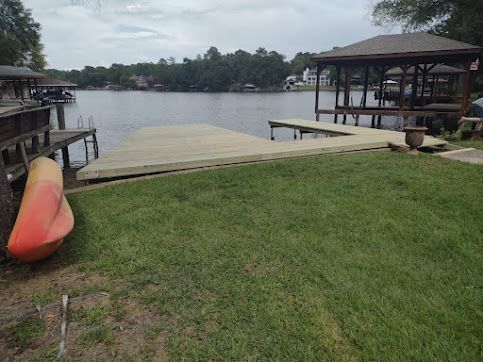
Waterfront Access Built for Daily Use
Custom boat dock construction in Tyler for residential waterfront properties requiring dependable water access and long-term durability
Waterfront properties on East Texas lakes need docks that handle seasonal water level changes, wave action from boat traffic, and constant moisture exposure without deteriorating or becoming unsafe. CWG Fence and Decks designs and builds boat docks in Tyler and surrounding lake communities with layouts that match your shoreline profile, water depth, and how you use the dock—whether for a single boat slip, swim access, or a larger platform for multiple watercraft. Dock construction accounts for soil conditions at the shoreline, expected wind and wave forces, and the materials that hold up best in constant water contact.
Docks are anchored using pilings driven into the lakebed or adjustable legs that rest on footings, depending on water depth and bottom composition. Decking is spaced to allow water drainage and air circulation, which reduces trapped moisture that accelerates wood rot. Hardware must resist corrosion in wet environments, so galvanized or stainless steel fasteners are used throughout the structure.
Schedule a shoreline consultation to review site-specific dock design and material options.
What Functional Dock Construction Involves
Boat dock framing uses treated lumber rated for water immersion, and piling placement is calculated based on dock length, expected load, and how much lateral force the structure must resist. Longer docks require intermediate supports to prevent sagging, and wider platforms need cross-bracing to resist twisting. Cleats, bumpers, and ladder placement are customized to your boat size and boarding preferences.
Once the dock is installed, you'll notice stable footing when boarding a boat, minimal movement when waves pass underneath, and secure tie-off points that hold lines without pulling free. The deck surface stays usable even when wet, and the structure remains accessible as water levels fluctuate within normal seasonal ranges. Properly built docks handle the weight of people and equipment without excessive flex, and connections remain tight through temperature changes and moisture cycles.
Dock design must account for local regulations regarding setbacks from property lines, allowable dock length, and environmental restrictions in some lake zones. Some shorelines have rocky or hard-packed bottoms that require augered piling holes, while others have soft sediment where pilings can be driven or jetted into place. The construction approach depends on what's found during the site assessment.
Waterfront property owners want to understand how dock construction adapts to their specific shoreline and what design choices affect long-term performance and usability.
Questions Before Starting Your Dock Project
What determines the best dock layout for a property?
Dock layout depends on your shoreline slope, water depth at various distances from shore, prevailing wind direction, and whether you need a straight walkway, L-shaped configuration, or larger platform—deeper water closer to shore allows shorter docks.
How do seasonal water level changes affect dock design?
Docks in East Texas lakes are typically built to remain functional within the normal seasonal range, using adjustable leg systems or pilings tall enough to keep the deck accessible when water drops and high enough to avoid submersion during typical high-water periods.
What materials hold up best in constant water exposure?
Pressure-treated southern yellow pine rated for ground contact or water immersion resists rot and insect damage, while composite decking eliminates wood maintenance but requires additional structural support due to flexibility—hardware must be hot-dipped galvanized or stainless steel to prevent rust failure.
How is the dock anchored to prevent movement?
Pilings are driven or augered into the lakebed to a depth that provides stability against wind and wave forces, and the dock frame is bolted to the pilings with hardware that allows slight vertical movement as water levels change without loosening connections.
What permits or regulations apply to dock construction in Tyler-area lakes?
Most East Texas lakes managed by water districts or homeowner associations require permits that specify allowable dock dimensions, setbacks from neighboring properties, and construction standards—permit requirements vary by lake and must be confirmed before starting work.
CWG Fence and Decks handles boat dock projects with attention to site-specific conditions and local waterway regulations. Arrange a site visit to discuss your waterfront access needs and review dock configurations that match your property and intended use.